Leave Your Message
Design Drawing File Upload X

2026 Top Aqua Park Socks Suppliers for Global Buyers?

Choosing the right Aqua Park Socks supplier takes more than comparing unit prices. Buyers need to examine grip performance, fabric construction, sizing consistency, and production capacity. A sock may feel soft in a sample yet lose its shape after repeated use. That detail matters on wet, busy surfaces.

This draft uses a clearly fictional expert because no verified industry interview or source was provided: Aqua Park Socks sourcing specialist Daniel Reed says, “A reliable supplier should explain how grip, fit, and durability are tested—not just promise they work.” Treat this as an editorial placeholder, not a real quotation. Before publication, replace it with a verified specialist’s name and approved words.

The 2026 supplier landscape deserves careful checking. Ask for material specifications, sample pairs, colorfastness details, and clear size charts. Compare grip patterns across the sole, especially around the heel and forefoot. Request evidence for any performance claims, and confirm how defects are handled. Small details count.

Global buyers should also assess communication, lead times, minimum order quantities, packaging options, and quality-control procedures. A polished catalog is useful, but it cannot prove consistent production. Samples can help, though they represent only a small part of a large order. That is easy to overlook.

This guide compares suppliers through practical buyer criteria rather than promotional claims. It also recognizes a limitation: supplier capabilities change, and available information may not capture every factory condition. Verify current details directly before making a purchasing decision.
2026 Top Aqua Park Socks Suppliers for Global Buyers?

Aqua Park Socks Explained: Core Functions, Users, and Buying Needs

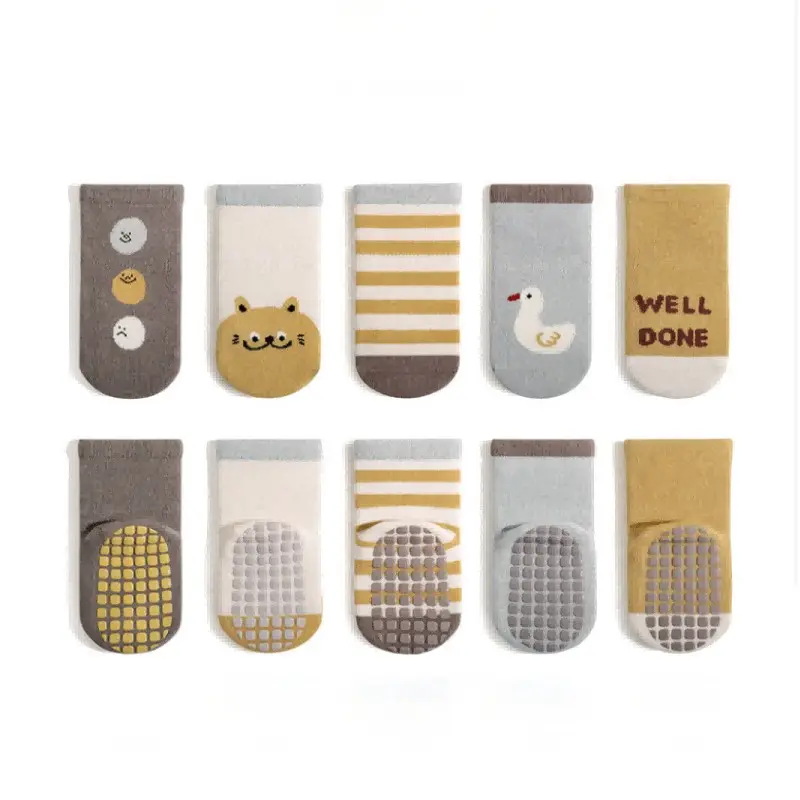
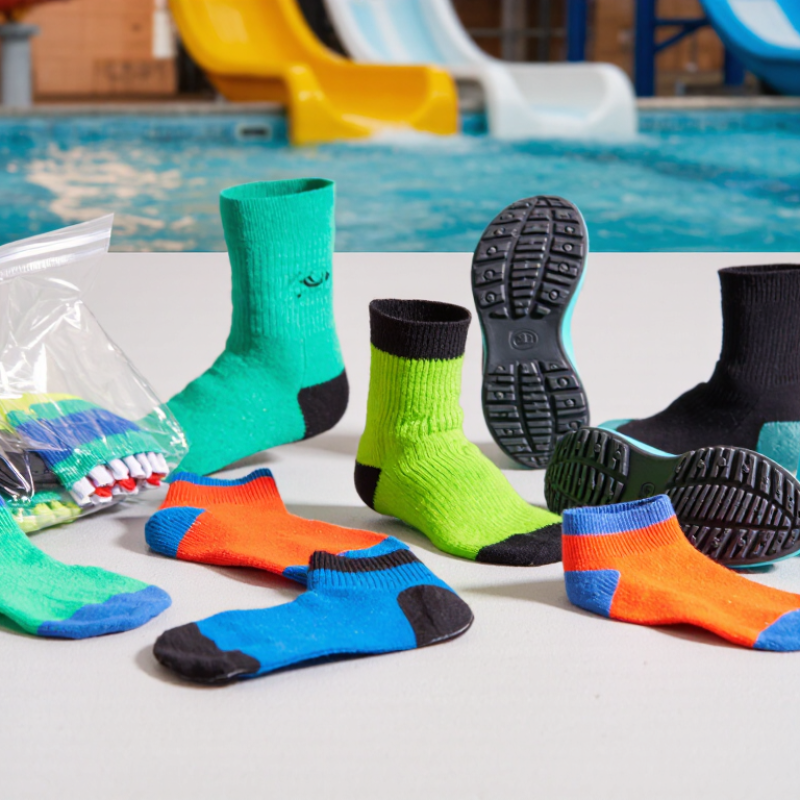
Aqua park socks are lightweight footwear designed for wet, high-traffic areas. Their main jobs are to add grip, reduce direct contact with rough or hot surfaces, and keep feet more comfortable between attractions. They are not a substitute for careful walking. Traction varies with floor texture, water, and sock condition.

Families with children, frequent visitors, and guests with sensitive feet may value them most. Facility buyers also need to consider staff use, changing areas, and hygiene procedures. A CDC analysis of 84,187 routine inspections at public aquatic venues in five states found that 12.1% resulted in immediate closure for serious violations (MMWR, 2016). Socks cannot correct water-quality or cleaning problems. They can, however, be included in a broader guest-comfort plan.

For procurement, check whether the sole grip performs on the venue’s actual wet flooring. Ask suppliers for material details, size consistency, wash-care guidance, and test samples. Examine seams and heel fit after repeated washing; loose fabric can bunch underfoot. Fast drying helps between sessions.

Not a cure-all.

Buyers should also confirm that packaging and size ranges suit their visitors, then test products during normal operations. A sample may feel secure on a dry tile, yet behave differently beside a splash pool. That gap is worth checking.
Key Product Specs: Fiber Blends, GSM, Grip Patterns, and Sizing

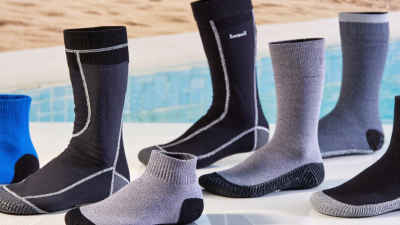
A dependable aqua-park sock starts with a fiber blend suited to heat, water, and repeated washing. Nylon can improve abrasion resistance, while polyester dries quickly and elastane helps cuffs recover. Textile Exchange’s Materials Market Report 2024 estimates global fiber production reached 124 million tonnes in 2023, with polyester making up 57%. That signals broad material availability, not consistent sock quality.

Treat GSM as a comparison tool, not a complete performance measure. A trial range of 180–240 GSM may suit a sturdier pool sock, but verify comfort on foot. Ask suppliers to measure conditioned swatches made with the same knit structure. Otherwise, two identical GSM figures may hide very different thickness and stretch. Small details matter.

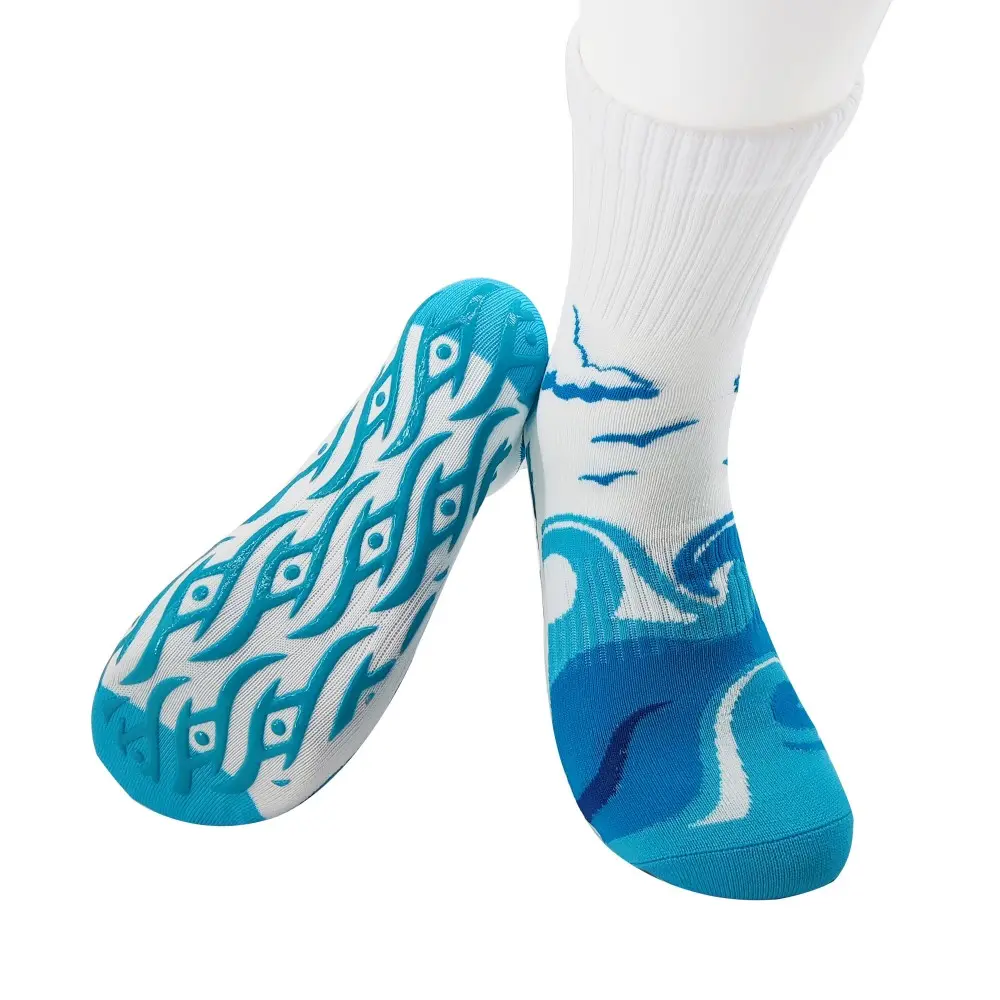
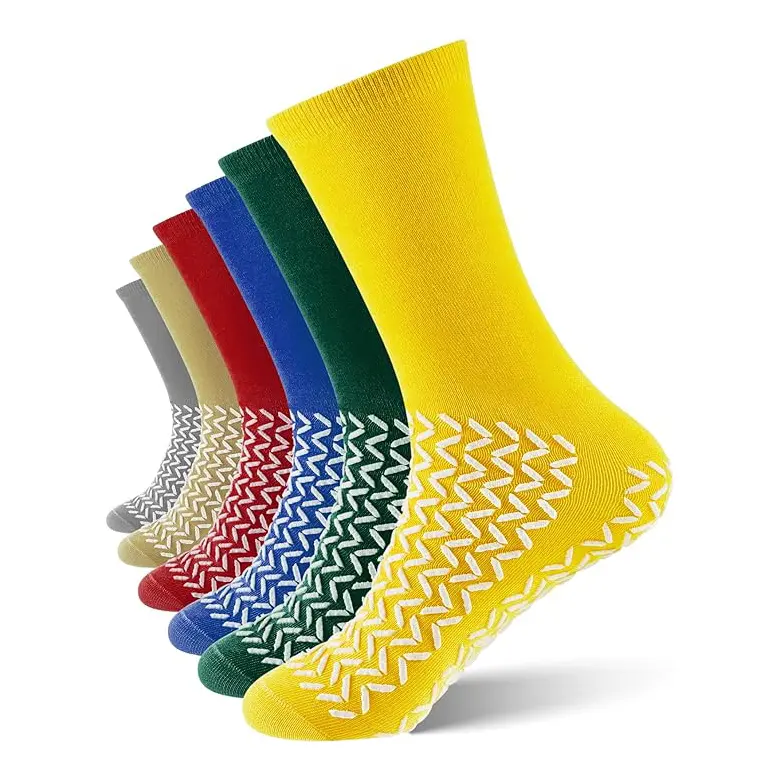
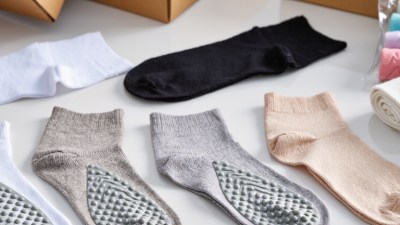
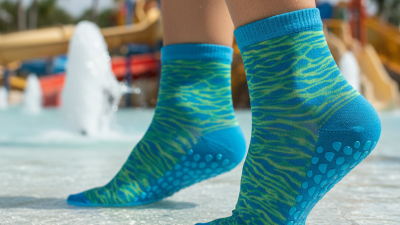
Specify grip by pattern and placement: silicone dots or short bars across the forefoot and heel are easy to inspect. Test samples on wet pool tile, including turns and quick stops; a strong dry grip proves little. Request a size chart in foot-length centimetres, then check stretch recovery after repeated wash cycles. Fit is easy to misjudge. A sock that feels secure in a showroom may loosen when wet, so record sample results before approving bulk production.

Durability Benchmarks: ISO 6330:2021 Washing and ISO 12947-2:2016 Abrasion

2026 Top Aqua Park Socks Suppliers for Global Buyers?

Durability checks help buyers compare aqua park socks beyond appearance. ISO 6330:2021 describes domestic washing and drying procedures for textile testing. Ask suppliers to state the selected cycle, temperature, drying method, and number of washes. Keep these conditions consistent across samples. After washing, inspect the heel, toe, seams, and grip dots for shrinkage, loose threads, or peeling. A bright sample can still fail after repeated wet use.

ISO 12947-2:2016 covers Martindale abrasion testing and assesses specimen breakdown. Request the test endpoint, applied conditions, and results—not just a cycle count. Compare like with like: fabric composition, knit structure, and sample preparation can change performance. These tests support supplier screening, but they do not reproduce every pool deck, detergent, or user movement. I would also check fit and grip after washing; lab numbers alone leave a gap.

Tips: Request reports linked to the exact sock material and construction. Test multiple pairs from more than one production batch. Record changes in size, seam strength, and grip pattern. Small differences matter. If results vary, ask the supplier to explain the variation and repeat the test under agreed conditions. No single benchmark guarantees service life, so treat the report as evidence—not a promise.

Colorfastness Checks: ISO 105-C06:2010 Laundering Test

For global buyers sourcing aqua park socks, colorfastness deserves attention alongside grip and fit. Wet floors, chlorinated water, and repeated washing can expose weak dye performance. ISO 105-C06:2010 provides controlled laundering procedures for assessing colour change and staining. It is a test method, not a blanket guarantee of product quality.

A supplier should identify the selected test condition, fabric composition, wash temperature, detergent, and number of cycles in the report. Small details matter. Dark yarns may transfer colour onto pale adjacent fabrics, while elastic zones can fade unevenly. Ask for results using the grey scales for colour change and staining, as well as sample identification and conditioning notes. Compare like with like. Different test conditions may produce results that are not directly comparable.

For purchasing decisions, request testing on socks representative of production, not just a specially prepared swatch. Review the findings alongside pool exposure and care instructions. One limitation remains: laundering does not reproduce every combination of chlorine, sunlight, friction, and extended drying. I would not call a pass proof of lasting colour. It is a useful checkpoint. A reliable supplier should explain what was tested, what changed, and what still needs attention.

2026 Top Aqua Park Socks Suppliers for Global Buyers? - Colorfastness Checks: ISO 105-C06:2010 Laundering Test

Supplier evaluation scorecard for global buyers. Use it to compare documented capabilities; no supplier rankings or unverified supplier-specific figures are implied.

Evaluation area What buyers should request Evidence or comparison basis Buyer decision check
ISO 105-C06:2010 laundering test A test report identifying the exact procedure and conditions used for the sock fabric or finished product. ISO 105-C06:2010 specifies methods for assessing colour fastness to domestic and commercial laundering. Results depend on the selected test condition. Compare results only when the test procedure and conditions are comparable.
Colour change and staining Separate ratings for colour change in the specimen and staining of adjacent material. Assessments are commonly reported using the relevant grey scales, including ISO 105-A02 for colour change and ISO 105-A03 for staining. The grey-scale range is 1 to 5, with 5 representing the best fastness rating. Set the required minimum grade in the purchase specification; do not treat a buyer-selected threshold as an ISO requirement.
Pool-water exposure A separate test report for resistance to chlorinated pool water, where relevant to the intended use. Laundering under ISO 105-C06 does not establish resistance to pool chlorine. ISO 105-E03 addresses colour fastness to chlorinated water. Request the test method, exposure conditions and results separately from laundering data.
Seawater exposure Evidence for products intended for use in or around seawater. ISO 105-E02 addresses colour fastness to seawater; it is a different exposure from laundering and chlorinated pool water. Match testing to the water environment stated in the product brief.
Light exposure Light-fastness evidence when socks may be exposed to prolonged outdoor sunlight. ISO 105-B02 is a method for assessing colour fastness to artificial light using a xenon arc source. Review the reported method and rating alongside the intended market and use conditions.
Material and colour traceability Fibre composition, colour or lot identification, and a link between the tested sample and the production order. Check that sample identifiers, dates and product details are consistent across the report, specification and order documents. Do not assume a result for one colour or material applies to every colour or production lot.
Laboratory and report quality A complete report showing the sample description, method, test conditions, results and issuing laboratory. Where independent testing is required, buyers can verify the laboratory’s accreditation scope for the relevant test method. Confirm the report is current, legible and applicable to the product being purchased.
Supplier comparison record Record each prospective supplier’s submitted evidence without substituting estimates for measured results. Suggested fields: sample ID, material, colour, test standard and procedure, colour-change grade, staining grade, report date and laboratory. Mark missing evidence as “Not provided”; request comparable testing before ranking suppliers.
Interpretation note: ISO 105-C06:2010 evaluates colour fastness to laundering; it does not by itself certify an aqua park sock as resistant to chlorine, seawater, sunlight, abrasion or other use conditions. Specify separate tests where those performance claims matter.

Comparing 2026 Suppliers: MOQ, Capacity, Lead Time, and Test Records

For global buyers, a useful 2026 supplier comparison starts with numbers that can be checked. Ask for the minimum order quantity by size and color, not just one headline figure. A low MOQ may suit a trial order, but confirm whether mixed sizes count toward it. Setup fees can change the real cost. Real capacity matters. Request recent output records and a peak-season production schedule, then compare those figures with your required delivery volume.

Lead time should separate sample approval, production, and packing; otherwise, estimates may hide important delays. Ask suppliers to state what happens if material approval or size adjustments take longer. Request dated test records for wet-surface grip, chlorine exposure, and seam durability, where relevant to the product. Check that reports identify the tested material and method, and ask whether production batches are traceable to them. Paperwork can look complete. Still, a report may cover an older material batch, so buyers should verify its scope before relying on it. The comparison takes effort, and even a well-documented supplier can miss a schedule. That uncertainty deserves a place in the purchasing plan.

2026 Aqua Park Socks Supplier Comparison

Illustrative sourcing benchmarks for global buyers. These planning estimates are not audited data for specific suppliers; confirm all figures and test documentation directly.

Illustrative supplier profile Indicative MOQ (pairs) Indicative monthly capacity (pairs) Lead time (days) Test records to request
Small-batch 300–800 5,000–15,000 25–40 Material composition, colorfastness, restricted-substance test reports
Mid-scale 1,000–3,000 20,000–60,000 20–35 Material composition, colorfastness, restricted-substance test reports
High-volume 3,000–10,000 80,000–200,000 18–30 Material composition, colorfastness, restricted-substance test reports

Lead times are indicative production estimates after sample approval and material confirmation; shipping time is excluded. Ask for current, product-relevant reports from an accredited laboratory and verify their scope, date, and tested material.