Leave Your Message
Design Drawing File Upload X

How to Choose the Best Anti Slip Yoga Socks for Wholesale?

Choosing the best anti-slip yoga socks for wholesale requires more than comparing prices and surface patterns. Buyers must connect product performance with market demand, user safety, and supplier reliability. The global yoga market continues to expand, although estimates differ by research method. Grand View Research’s Yoga Market Size, Share & Trends Analysis Report projects sustained growth through 2030. Future Market Insights also identifies yoga apparel as a growing category, supported by studio participation, home workouts, and wellness spending.

The figures are not perfectly comparable. That limitation matters.

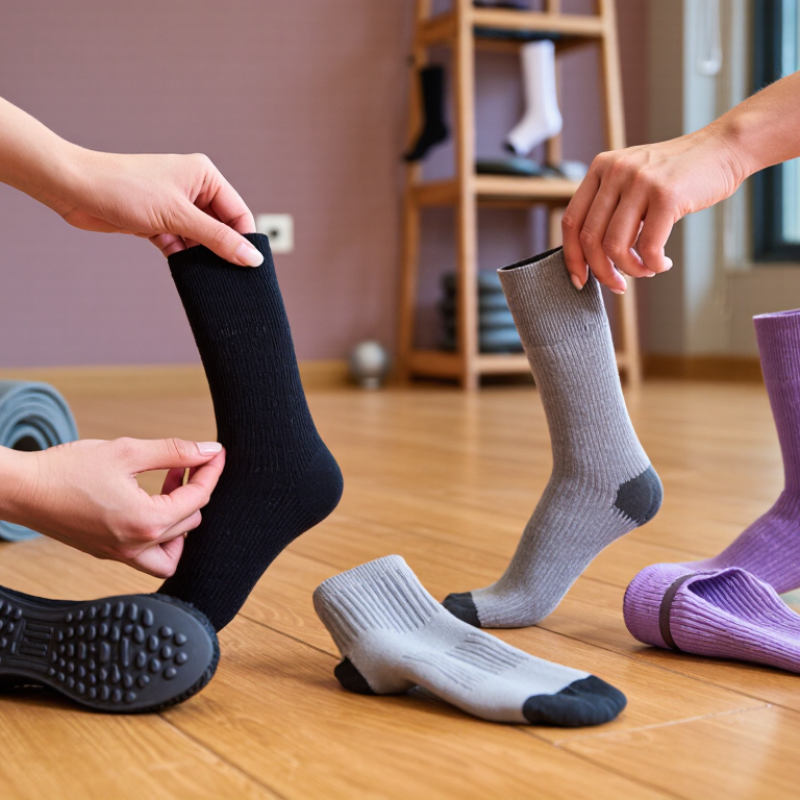
For wholesalers, “Yoga Socks Anti Slip” should mean more than rubber dots on a sole. It should reflect tested grip, comfortable compression, breathable fabric, and stable sizing. During product evaluation, place each sample on wood, vinyl, and studio mats. Check whether the silicone print remains flexible after repeated washing. A sock that grips well on one surface may slide on another. This is easy to overlook.

Professional sourcing also requires documented material information, factory quality controls, and consistent batch inspection. Consider cotton or recycled polyester blends, moisture management, toe construction, and packaging efficiency. Request test reports where relevant, but verify their scope and date. Certifications can support trust, yet they do not replace hands-on inspection.

Small details affect wholesale returns.

A strong supplier should explain minimum order quantities, lead times, defect handling, and customization limits. The International Organization for Standardization emphasizes risk-based quality management through ISO 9001 principles, which can help buyers assess process consistency. Still, a certificate alone cannot prove excellent socks. Practical sampling, wash testing, and feedback from instructors provide stronger evidence. The best purchasing decision balances data with experience, while admitting that no single report predicts every customer’s preference.
How to Choose the Best Anti Slip Yoga Socks for Wholesale?

Define Your Wholesale Needs and Target Yoga Customer

Choosing anti-slip yoga socks for wholesale starts with a clear definition of your business needs. Estimate monthly demand, preferred minimum order quantity, size ratios, and acceptable landed cost. A studio may need 50 pairs for small classes, while an online retailer may require several hundred pairs with varied colors and sizes. Grand View Research estimates that the global yoga market will continue growing strongly through 2030, but rising demand does not guarantee fast sales for every design.

Study your target yoga customer before approving samples. Beginners often value soft fabric, full-foot grip, and easy washing. Hot-yoga users may prefer breathable, moisture-managing materials. Older customers may need wider openings and stable heel construction. Pilates customers may favor lighter socks with discreet silicone patterns. The Global Wellness Institute reported that the wellness economy reached about 6.3 trillion dollars in 2023, showing broad consumer interest in wellness products. Still, market growth can encourage overbuying. I would test assumptions with customer interviews and small trial orders.

Tips: Request lab or factory test records for grip, shrinkage, colorfastness, and repeated washing. Ask for samples after ten wash cycles, not only fresh samples. Compare performance on wood, vinyl, and studio mats. Check whether the grip feels secure without becoming stiff. A perfect size forecast is unlikely. Leave room for adjustment. Track returns, customer comments, and sell-through rates before increasing the next order.
Compare Grip Materials, Sock Designs, and Performance Features

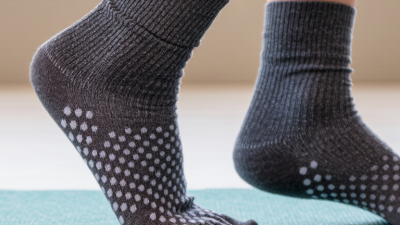
For wholesale buyers, grip material should match the studio floor, washing routine, and training intensity. Silicone grips usually provide soft, flexible traction on wood or vinyl floors. TPR can feel slightly firmer and often suits repeated commercial use. PVC may reduce cost, but it can feel less natural during slow, balance-focused practice. Test samples on clean and lightly dusty floors. Real conditions reveal more than a specification sheet.

Sock design affects stability as much as the grip compound. A low-cut style feels cooler, while a higher cuff offers more ankle coverage. Open-toe designs improve toe contact, yet some users dislike exposed skin. Full-foot coverage feels secure during reformer work and cooler studios. Look for flat seams, breathable knit zones, and a heel tab that prevents slipping. Elastic should hold the arch without leaving deep marks. Small details matter.

Performance checks should include lateral movement, sweat control, shrinkage, and grip retention after washing. For wholesale evaluation, request wash-test data and inspect several sizes, not one perfect sample. A dense grip pattern may improve traction but reduce flexibility. That trade-off is easy to miss. In one trial, maximum grip felt secure but became uncomfortable after an hour. A better choice balances traction, comfort, durability, and predictable sizing. Leave room for feedback; instructors often notice problems buyers overlook.

Evaluate Sizing, Comfort, Durability, and Safety Standards

How to Choose the Best Anti Slip Yoga Socks for Wholesale?

Choosing wholesale yoga socks starts with realistic sizing, not attractive packaging. Ask suppliers for detailed measurements, including foot length, ankle width, and cuff height. A reliable size range should fit different customers without squeezing toes or sliding during movement. I once tested socks that felt perfect while standing, but loosened during lunges. Movement exposes weak sizing decisions. Request samples in several sizes. Test them barefoot.

Comfort depends on more than soft fabric. Check breathability, seam placement, stretch recovery, and moisture control after a full class. The sole should feel flexible, while silicone or rubber grips should support balance without feeling harsh. Walk, squat, and hold a plank in each sample. Small pressure points become painful after repeated use. Some suppliers overstate softness, so touch and wash the fabric yourself.

Durability testing should include repeated washing, stretching, and friction against studio floors. Inspect whether grips crack, peel, or lose traction after several cycles. Safety also requires reviewing applicable textile labeling and product safety requirements in each target market. Ask for current test reports from qualified laboratories, not vague claims. Documentation matters. Still, paperwork cannot replace physical testing. A sock may pass a basic inspection yet feel unstable on a smooth floor. Record defects, compare batches, and keep realistic replacement expectations for wholesale customers.

Review Suppliers, Customization Options, and Minimum Order Quantities

Choosing the best anti slip yoga socks for wholesale requires more than comparing unit prices. A reliable supplier should provide material details, factory photos, production samples, and recent quality records. Ask whether the grip pattern uses silicone, rubber, or another compound. Check its flexibility after repeated washing. Request test samples in several sizes, not just one pair. Small differences matter.

Customization may include colors, woven labels, packaging, grip shapes, and fabric blends. Confirm artwork formats, color references, and sample approval procedures before production. A supplier should explain how custom changes affect costs and lead times. For example, a new grip mold may require a separate setup fee. Printed packaging often has a lower entry cost than custom sock construction. Keep specifications written in one document. Verbal promises can become unclear.

Minimum order quantities vary by color, size, packaging, and customization level. A low MOQ can reduce inventory pressure, but the unit price may rise. A high MOQ may improve pricing while creating slow-moving stock. Ask for a tiered quotation, including sample fees, shipping terms, and replacement policies. I once treated MOQ as the main decision factor, and that was a mistake. Unsold sizes damaged the budget more than a higher unit price. A small pilot order can reveal grip durability, toe comfort, and packaging problems before larger production. There is no perfect forecast. Review sales data after the first shipment.

How to Choose the Best Anti Slip Yoga Socks for Wholesale? - Review Suppliers, Customization Options, and Minimum Order Quantities

Indicative wholesale benchmarks for private-label anti-slip yoga socks. Actual specifications, prices, and order quantities should be confirmed with each supplier.
Supplier Profile Typical Sock Construction Grip Performance Available Customization Typical MOQ Sample Policy Bulk Lead Time Indicative Wholesale Price Best Suited For
Basic cotton-blend producer Cotton-rich knit, elastic arch support, low-cut or ankle length PVC or silicone dot grip; suitable for light-to-moderate studio use Color, size label, hangtag, packaging, basic logo placement 300–500 pairs per color or design Paid sample; sample charge commonly credited after bulk order 25–40 days after approval Approximately US$1.20–2.20 per pair Entry-level retail, promotional programs, and high-volume orders
Performance synthetic producer Polyester or nylon blend, moisture-management yarn, reinforced heel and toe Dense silicone grip pattern with better stability during heated or dynamic sessions Custom knit pattern, grip layout, colors, woven logo, size range, packaging 500–1,000 pairs per design Development sample in 7–15 days; bulk sample approval recommended 30–45 days after final approval Approximately US$1.80–3.50 per pair Yoga studios, fitness retailers, and performance-focused collections
Eco-material specialist Organic cotton, recycled polyester, or bamboo-blend knit with elastane Silicone or water-based grip; performance varies by fabric and grip density Certified-material options, recycled packaging, custom colors, labels, artwork 800–1,500 pairs per color or design Paid sample plus material verification where applicable 35–55 days after material and artwork approval Approximately US$2.20–4.20 per pair Sustainable brands and retailers requiring material documentation
Small-batch private-label workshop Standard cotton or cotton-polyester blend with basic elastic support Standard dot grip; generally appropriate for beginner and low-impact use Existing colors, printed logo, sticker, simple belly band, limited size options 100–300 pairs per design Stock sample or prototype available; customization may require a setup fee 20–35 days after artwork approval Approximately US$2.00–4.00 per pair Start-ups, online sellers, test launches, and limited-edition collections
Large-volume automated factory Machine-knitted nylon, polyester, or cotton blend with automated finishing Consistent silicone grip coverage and repeatable production quality Full custom knitting, jacquard logo, grip mold, packaging, carton marks, size grading 1,000–3,000 pairs per design Pre-production sample required; tooling or mold charges may apply 40–60 days after sample and payment confirmation Approximately US$1.00–2.80 per pair National retailers, distributors, and recurring replenishment programs
Premium technical manufacturer Technical nylon or merino-blend construction, anatomical fit, compression zones High-coverage silicone grip designed for repeated studio, barre, or Pilates use Custom yarn blend, anatomical sizing, grip artwork, color matching, premium packaging 1,000–2,500 pairs per design Technical sample and wear-test approval recommended 45–70 days after technical approval Approximately US$3.50–7.00 per pair Premium wellness retailers and professional studio networks
Wholesale evaluation checklist: Confirm fiber composition, size measurements, grip adhesion after washing, colorfastness, seam strength, packaging details, applicable testing documents, payment terms, inspection standards, and whether the MOQ applies per color, size, or total order.

Calculate Total Costs, Quality Value, and Wholesale Profit Potential

How to Choose the Best Anti Slip Yoga Socks for Wholesale?

Calculate Total Costs, Quality Value, and Wholesale Profit Potential

Wholesale pricing starts with the landed cost, not the factory quote. Add unit price, packaging, freight, duties, payment fees, and inspection costs. A sock quoted at $1.20 may reach $1.68 after these expenses. Small charges matter.

Request samples before placing a large order. Test the silicone grip on wooden floors, yoga mats, and slightly damp surfaces. Check stitching after repeated washing. Measure stretch recovery, toe comfort, fabric thickness, and color stability. These details influence customer returns and repeat orders. Ask for production tolerances and defect-handling procedures in writing.

Quality value means comparing performance with total cost. A cheaper sock is not profitable if five percent arrive damaged or lose grip quickly. For example, selling at $3.20 with a $1.68 landed cost leaves $1.52 before warehouse labor, advertising, and returns. Calculate profit at realistic order volumes, not ideal ones. Include slow-moving sizes and seasonal demand. Your first forecast may be wrong. Mine often needed adjustment after actual sales data appeared.

A practical buyer can also compare packaging options. Individual boxes look polished but increase storage and freight costs. Simple recyclable bands may protect margin better. Set a target defect rate, document sample results, and keep a contingency budget for delays. Profit potential becomes clearer when quality evidence and cost records sit together.