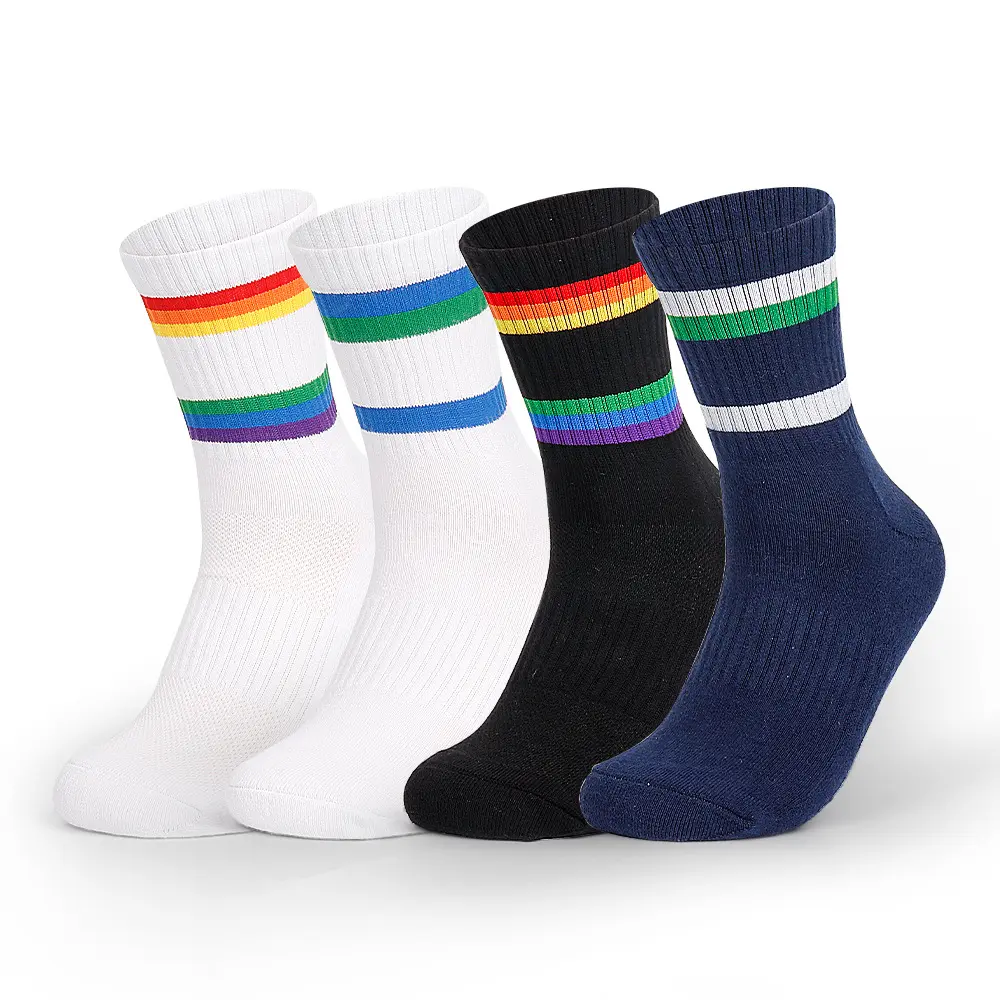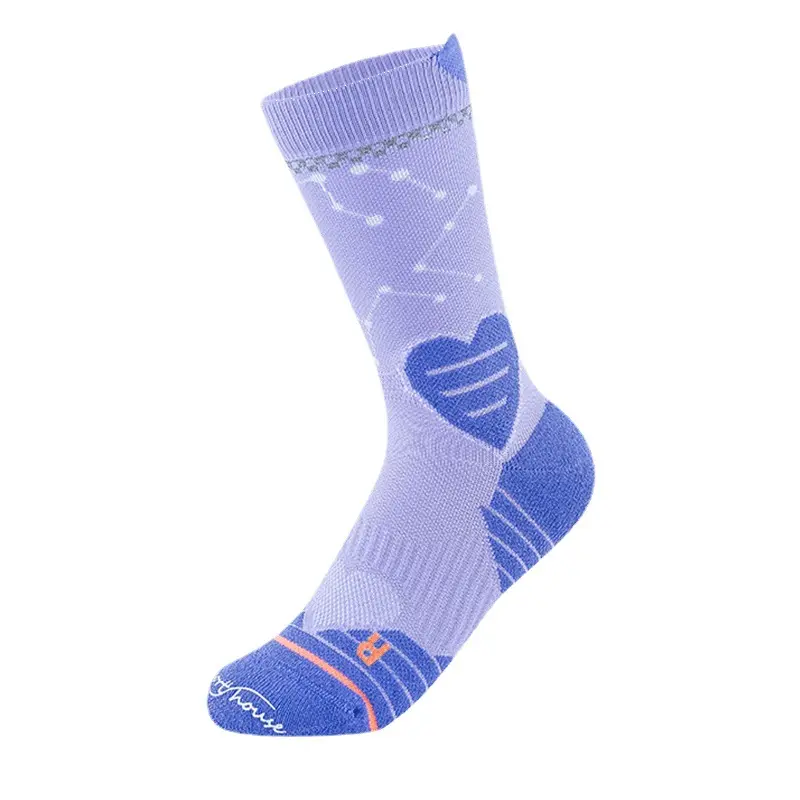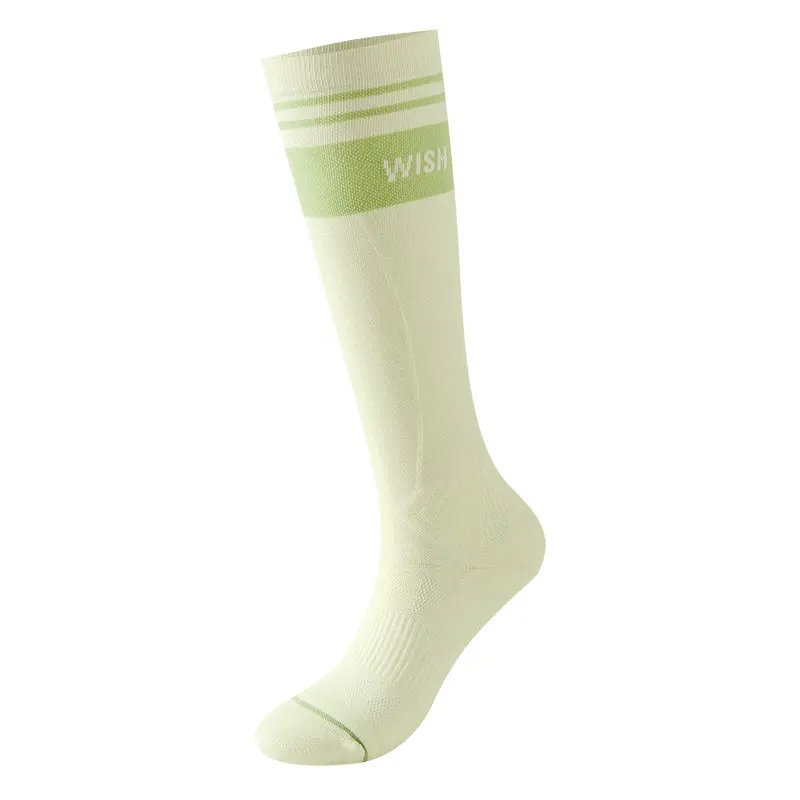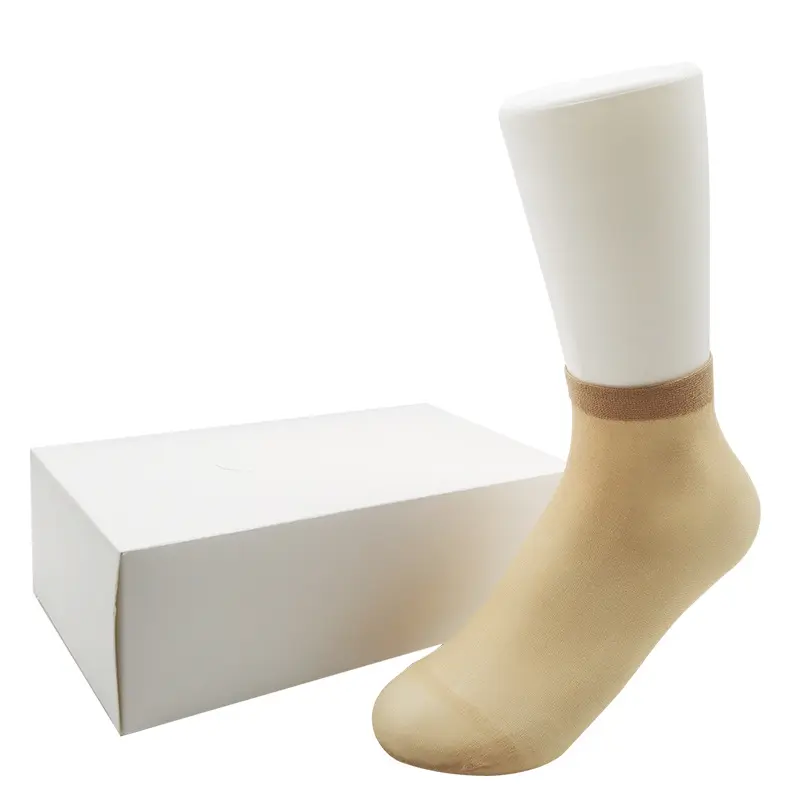
Choosing reliable China Top Acrylic Socks Manufacturers can shape product quality, delivery stability, and customer satisfaction. For global buyers, Acrylic Socks offer warmth, color flexibility, and practical cost control. Yet supplier selection requires more than attractive catalog photos.
This guide explores manufacturers that serve international markets and examines their production capabilities, material sourcing, and quality procedures. Experienced factories should explain yarn composition, knitting methods, size grading, and finishing standards clearly. Buyers should also review sample quality, factory communication, packaging details, and order lead times. Small details matter. A loose cuff or uneven pattern can damage a retail launch.
Credible suppliers normally provide business information, product specifications, and relevant testing documents. Depending on the destination market, buyers may request checks for colorfastness, fiber content, shrinkage, and harmful substances. Certifications can support trust, but they should be verified rather than accepted blindly. Not every large factory offers the best service, and not every small supplier lacks expertise. That is an important limitation.
MOQ, customization, private labeling, and seasonal capacity also deserve careful discussion. A factory may promise fast production, but actual performance can change during winter demand. Requesting pre-production samples and confirming inspection responsibilities reduces avoidable risks. Clear contracts help both sides manage quality expectations, payment terms, and delivery schedules.
The following overview is designed for importers, wholesalers, retailers, and brand owners seeking dependable Acrylic Socks production in China. It combines practical sourcing considerations with realistic evaluation points. Results still depend on direct verification. A polished website is not proof. Careful questions reveal more.
Acrylic socks combine low weight, soft hand feel, and reliable warmth. The fiber resembles wool, but usually costs less and dries faster. It also holds color well, making it useful for everyday socks, uniforms, hiking styles, and cold-weather workwear. Chinese manufacturers commonly blend acrylic with cotton, polyester, nylon, or elastane to improve comfort and shape recovery.
Textile Exchange’s Materials Market Report 2024 estimates acrylic at roughly 2% of global fiber production. That share is small, but its performance remains commercially relevant. Acrylic fibers can trap air within a knitted structure, creating warmth without excessive thickness. However, pilling may appear after repeated friction. Buyers should request abrasion, wash-shrinkage, colorfastness, and composition tests before approving bulk orders. Small details matter.
Global applications differ by climate and consumer expectations. Outdoor buyers often prefer acrylic blends with reinforced heels and toes. Retail buyers may request fine-gauge knitting, softer finishes, and low-temperature washing instructions. Market research from Grand View Research identifies continued demand for synthetic fibers in apparel because of durability, price, and manufacturing flexibility.
Still, acrylic is not automatically a sustainable substitute. It is fossil-based and may release microfibers during washing. I would treat sustainability claims carefully, especially when recycled content or fiber-shedding data is unclear. A dependable supplier should provide test reports, traceable specifications, and realistic performance limits. Good socks begin with honest limits.
How to Evaluate China’s Acrylic Sock Manufacturers
China’s acrylic sock sector offers broad production capacity, but supplier selection needs evidence. Textile Exchange’s Materials Market Report 2024 estimated global fiber production at 124 million tonnes in 2023. Acrylic represented only a small share, near 2%, so factory specialization matters. Ask whether the manufacturer produces acrylic socks regularly or simply accepts occasional orders. Review three recent samples. Check softness, pilling, stretch recovery, toe-seam comfort, and color consistency after washing. A factory that provides test records is more credible than one offering only attractive photos.
Use measurable checks. Request fiber-composition reports from an independent laboratory, not only internal documents. Compare washing results against ISO 6330 procedures and agree on shrinkage, colorfastness, and dimensional tolerances before production. The Global Organic Textile Standard’s 2024 public data showed certified facilities remain concentrated in major textile regions, reminding buyers to verify every certificate’s scope and validity. Certification alone is not quality proof. It can be outdated. Audit knitting rooms, yarn storage, needle control, inline inspection, and final packing. Ask for corrective-action records; mistakes reveal more than polished presentations.
Tips: Build a small pilot order first. Record yarn count, stitch density, blend ratio, and wash results. Confirm monthly capacity, lead time, minimum order quantity, and backup yarn sources in writing. Request a live video audit when travel is impractical. Do not select the lowest quote automatically; cheaper yarn may create faster pilling and higher returns. I would also test dark colors separately. They often expose uneven dyeing. Supplier evaluation is imperfect, but documented evidence reduces avoidable surprises.
This buyer evaluation framework assigns practical weights to the main factors used when comparing acrylic sock manufacturers: quality consistency, material traceability, testing and compliance, production capability, order flexibility, and communication. The percentages are a reference scoring model rather than performance data for any specific company or brand.
A reliable acrylic socks manufacturer should show clear manufacturing standards, not just attractive samples. Experienced factories control yarn composition, knitting tension, sock dimensions, and color consistency at each production stage. Ask for material specifications, inspection records, and recent test reports before confirming an order. A professional supplier should explain these details without vague promises.
Customization requires more than adding a logo. Buyers should confirm size ranges, knitting patterns, cuff height, packaging, labels, and seasonal color references. A practical manufacturer provides a pre-production sample and records approved measurements. Small differences can affect comfort. In my experience, even a two-millimeter change in the cuff may alter the fit, though this detail is sometimes overlooked. Communication can fail here.
Tips: Request a sample made with the intended yarn blend. Check stitching, stretch recovery, odor, loose threads, and washing performance. Ask how defective pairs are separated and counted. Quality control should include incoming yarn checks, in-line inspections, and final random sampling. Photos help, but physical inspection is more reliable. Do not rely only on a polished factory video. Some suppliers may still need stronger documentation, so buyers should review corrective-action records and clarify acceptable defect levels in writing.
China’s acrylic socks manufacturers now compete on documentation, not only price. Textile Exchange’s Materials Market Report 2024 recorded 124 million tonnes of global fiber production in 2023. Buyers therefore need traceable material decisions.
Reliable export services should include fiber-content testing, HS-code support, commercial invoices, packing lists, and origin documents. Each production lot should connect to yarn records, dyeing details, and final inspection photos. For European shipments, suppliers should screen restricted substances under REACH. For the United States, children’s products may require CPSIA testing and certificates. ISO 9001-based quality controls can improve consistency, but certification alone proves little. An audit may miss an unapproved subcontractor. That risk deserves direct questions.
Tips: Request recent third-party reports, not screenshots. Check the laboratory’s accreditation. Ask whether tests cover dyes, heavy metals, and formaldehyde. Confirm carton labels before production. Textile Exchange’s 2024 report also notes that recycled polyester represented 12% of global fiber production in 2023, showing why recycled claims need transaction records and scope verification. Acrylic content needs the same discipline. A factory may offer export experience, yet struggle with destination-specific labeling. This is common, and buyers should test a pre-production sample. Small mistakes become expensive at customs.
| Evaluation Dimension | Buyer Requirement | Applicable Standard or Regulation | Recommended Evidence | International Compliance Note |
|---|---|---|---|---|
| Fiber Composition | The product specification should clearly state the percentage of acrylic and any other fibers, such as polyamide, polyester, elastane, cotton, or wool. | EU Regulation (EU) No. 1007/2011; U.S. Textile Fiber Products Identification Act | Third-party fiber-composition test report and approved product specification | Fiber names and percentages must match the sewn-in label, packaging, invoice, and test documentation. |
| Chemical Safety | Materials, dyes, prints, elastic components, and finishing agents should be screened for restricted substances. | EU REACH Regulation (EC) No. 1907/2006; destination-market chemical restrictions | Recent laboratory report covering relevant restricted substances and colorants | Testing should reflect the final finished sock, including dyes, silicone grips, metal parts, and packaging where applicable. |
| Product Safety Testing | The finished socks should be tested for colorfastness, pH, formaldehyde where required, azo dyes, and saliva or perspiration contact when relevant. | ISO, EN, ASTM, or destination-country textile test methods | Laboratory report showing test method, sample description, test date, and pass/fail result | The test method should be agreed before production because buyer and destination-market requirements can differ. |
| Children’s Product Compliance | Children’s socks require additional review of accessible components, trims, printed areas, and applicable flammability or chemical requirements. | U.S. Consumer Product Safety Improvement Act (CPSIA); applicable children’s-product rules in the destination market | Children’s-product testing records and, where applicable, a General Certificate of Conformity | Age grading, component selection, labeling, and testing scope should be confirmed before order placement. |
| Quality Management | The factory should operate documented procedures for incoming yarn inspection, knitting, linking, boarding, finishing, packing, and final inspection. | ISO 9001 is a commonly recognized quality-management certification | Valid certificate, scope of certification, audit date, and factory quality-control procedures | A certificate does not replace product inspection; the certification scope should cover the relevant manufacturing activity. |
| Social and Ethical Compliance | Buyers may require controls for working hours, wages, workplace safety, forced labor, child labor, and grievance procedures. | Buyer code of conduct; applicable labor laws; recognized social-audit programs | Recent social-audit report, corrective-action plan, and factory policy records | Social compliance requirements are often contract-specific and may be stricter than local legal minimums. |
| Factory Inspection | Pre-production approval, in-line inspection, and final random inspection should be available for private-label and bulk orders. | Buyer-approved inspection protocol; commonly referenced AQL sampling procedures | Inspection checklist, measurement record, defect classification, and corrective-action report | Acceptance limits, critical defects, major defects, and minor defects should be written into the purchase contract. |
| Export Documentation | The exporter should provide commercial invoice, packing list, transport document, and customs data consistent with the shipment. | Destination-country customs rules; Incoterms® 2020 for delivery responsibilities | Commercial invoice, packing list, bill of lading or air waybill, and export declaration where applicable | Product description, quantity, net weight, gross weight, carton count, value, and origin should be consistent across documents. |
| HS Classification and Origin | Acrylic socks are generally classified under the heading for hosiery, with the final subheading depending on fiber composition, construction, and national tariff rules. | Harmonized System; national customs tariff schedule | Customs classification review and certificate of origin when required | Do not rely on a generic HS code; confirm the final code with the importer, customs broker, or destination customs authority. |
| Packaging and Labeling | Labels should identify fiber content, size, care instructions, country of origin, importer information where required, and traceability details. | EU textile-labeling rules; U.S. FTC labeling requirements; destination-market packaging laws | Artwork approval, packaging specification, barcode record, and label compliance review | Language, care-symbol, recycling, and importer-address requirements vary by market. |
| Sustainability Information | Environmental claims should be supported by traceable material records and should not overstate recycled content or environmental benefits. | Destination-market environmental-claim rules; buyer sustainability policy | Yarn purchase records, recycled-content evidence where applicable, and chain-of-custody documentation | Use precise claims such as “contains recycled acrylic” only when the percentage and verification basis are documented. |
| Pre-Shipment Buyer Checklist | Confirm approved sample, measurements, composition, colors, packaging, carton marks, inspection status, and shipping documents before release. | Purchase contract and buyer quality manual | Signed approval sample, final inspection report, packing list, and document-matching checklist | A documented release process reduces risks involving wrong size, shade variation, labeling errors, quantity discrepancies, and customs delays. |
Choosing among China’s acrylic socks manufacturers requires more than comparing online catalogs. A suitable supplier should match your product goals, order volume, and delivery rhythm. Ask for factory photos, production capacity, and recent sample records. Better evidence matters. Request an acrylic blend sample with measured fiber content, cuff recovery, toe comfort, and color consistency. A useful sample should survive washing tests, not merely look soft on arrival. Keep notes. Small details reveal process control.
Review the supplier’s quality system before discussing price. Confirm whether workers inspect knitting, linking, loose threads, and packing at defined stages. Ask for a written tolerance sheet covering size, weight, shrinkage, and color variation. Independent testing can verify composition and colorfastness when required by your market. Communication also deserves testing. Send the same technical question to each candidate and compare the clarity of replies. Vague answers create expensive delays. Production may be capable, yet planning can still be weak.
A dependable Chinese partner should explain minimum order quantities, sample fees, lead times, payment terms, and corrective actions clearly. Check how the team handles rejected samples or late cartons. One factory may offer the lowest quotation, but unstable scheduling can damage seasonal sales. In practice, fast replies are not proof of reliability. A video call, pre-production sample, and staged inspection provide stronger evidence. Leave room for improvement. Even experienced buyers can overlook packaging strength or carton moisture during busy launches. Choose the supplier whose records and production behavior fit your actual business needs.